CUSTOMER STORYTELLING — JOURNEY → DECK → INTERACTIVE DEMO → HANDOFF
A customer-ready story for adaptive routines—habit that survive real life
Translated behavior signals + schedule constraints into a clear journey narrative, interactive prototype, and deck-ready visuals—built to explain personalization fast and scale with reusable patterns.
Metrics: 8 screens • 10 components • 3 story iterations • 6 feedback loops • 1 demo flow
ROLE
Experience Design (UX)
EXPERTISE
Journey • Deck • Prototype • Storyboard
YEAR
2024
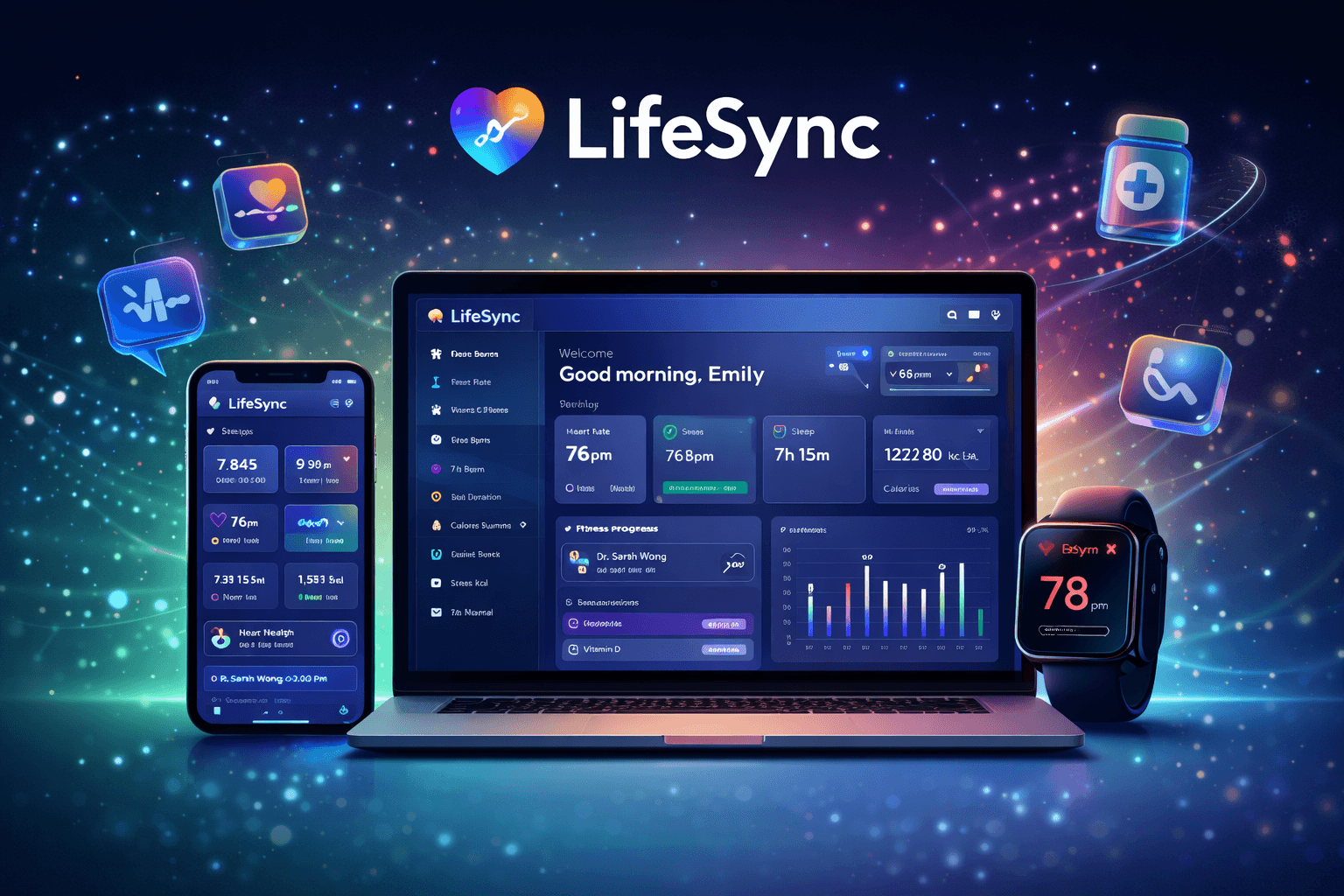
LifeSync is an adaptive routine + habit system designed for real life—when energy drops, plans break, and priorities shift. I packaged the work as a customer-ready story that explains how personalization reduces decision fatigue and how recovery-first routines help users restart without guilt. I translated user + business needs into a clear journey narrative, then built a scalable UX system (flows, states, components, and rules) so the value is easy to demo and straightforward to ship.
The work spans end-to-end experience design + stakeholder storytelling: problem framing → journey + IA/flows → hi-fi screens → interactive prototype → deck-ready narrative → handoff-ready specs. Deliverables were designed for reuse (components, variants, edge states) so teams can present consistently and implementation stays smooth.
Timeline
5 weeks — Discovery → Journey/Flows → Hi-fi → Prototype → Deck-ready narrative → Handoff
Background
Most habit products assume stable days and reward perfect streaks. When life gets messy, users hit decision fatigue, feel guilt, and quietly drop off. Users don’t need more reminders—they need a system that adapts, keeps choices lightweight, and supports recovery after slip-ups. LifeSync focuses on clarity + next-best action: a calm experience that guides users to the safest next step, keeps progress realistic, and maintains momentum even when routines break. The outcome is a narrative that’s simple to sell to stakeholders and a UI system that scales in production.
Deliverables
Customer journey • Story beats • Interactive prototype • Reusable components (variants + edge states) • Handoff specs
End-to-end experience design built for customer storytelling: requirements → journey → deck/demo assets → prototype → handoff.
Goal: reduce cognitive load, create decision clarity, and make the value easy to present and easy to build.
1) Cross-functional + constraints
Partnered with PM + Engineering to translate routine planning + recovery constraints into a clear system: journey, decision points, and edge states.
Aligned early on feasibility so the narrative and the build stayed consistent.
2) Templates/flows/diagrams
Used reusable templates to produce journey maps, process flows, and concept diagrams—helping stakeholders quickly understand the “before → after” story and reducing downstream rework.
3) Fast iteration
Moved rapidly from flows → wireframes → hi-fi → interactive prototype.
Incorporated feedback loops and usability signals to refine clarity, hierarchy, and the next-best action at every step.
Research & Insights
Ran quick interviews + pulse checks to learn why routines break (overplanning, guilt loops, notification fatigue, unclear priorities).
Synthesized into 2 core JTBD and defined success metrics: decision clarity, time-to-plan, follow-through, perceived control.
Design & Prototyping
Built the end-to-end flow: onboarding → goal setup → routine generation → daily check-in → reschedule/recover/start.
Designed key moments: adaptive suggestions, one-tap reschedule, and a minimum-effort mode for low-energy days.
Prototyped the full demo flow to validate comprehension and pacing.
System & Handoff
Created a scalable UI system: tokens + components + variants + edge states (empty/low energy/missed day/recovery).
Delivered handoff-ready specs: interaction notes, redlines, states, and reusable patterns to keep implementation fast and consistent.
Deliverables
Journey map • Flow diagrams • Interactive prototype • Deck-ready narrative • Component + state system
LifeSync is built for real life: adaptive planning, clear priorities, and graceful recovery—packaged as a customer-ready story that’s easy to demo and easy to ship.
Adaptive scheduling
Clarity & hierarchy
Recovery & reschedule
1) Reusable system contribution
Built a scalable system of tokens → components → variants → edge states, plus repeatable patterns for common scenarios (low energy, missed days, interruptions).
Result: consistent UI behavior across features and a foundation that scales in production and stays presentation-ready.
2) Demo-ready prototyping + handoff
Delivered an interactive prototype for the full “golden path” + key edge cases, with handoff-ready specs (states, behaviors, redlines, copy rules).
Partnered with Engineering to validate feasibility, align QA expectations, and ensure the demo story matches what ships.
Adaptive Scheduling
Generates flexible routines from goals, availability, and constraints—then auto-adjusts when the day shifts (low energy, surprise tasks, missed blocks) so plans stay realistic without rework.
Clarity & Hierarchy
A “Today” view that surfaces 1–2 priority actions, reduces decision fatigue, and keeps users oriented—always answering what to do now and what to do next.
Recovery & Reschedule
Slip-ups don’t reset momentum. Users can one-tap reschedule, switch to a Minimum-Effort mode, and continue with smaller wins—supporting follow-through without guilt or streak anxiety.
Outcomes from LifeSync’s end-to-end experience design—built to improve decision clarity, follow-through, and recovery, and packaged to present cleanly in customer storytelling.
Reduced planning friction
Built a clarity-first Next Best Action model and capped daily focus to 1–3 priorities, so users decide faster and start sooner.
Impact → faster task selection • fewer “what now?” moments • higher perceived control
Improved consistency through recovery
Designed one-tap reschedule, Minimum-Effort Mode, and non-punitive progress logic so missed days don’t feel like a reset.
Impact → stronger return-to-routine behavior • less drop-off after slip-ups • better real-world adherence
Scalable foundation for shipping
Created a reusable component + state system across flows (empty/loading/error/recovery) to keep experiences consistent as features expand.
Impact → cleaner handoff • faster iteration loops • easier future rollout + reuse
Learning
Clarity beats motivation: reducing friction + enabling graceful recovery drives consistency more than streak pressure.
Story takeaway
LifeSync shows how adaptive planning + recovery can be communicated as a crisp before/after narrative—ideal for demos, stakeholder buy-in, and confident implementation.