END-TO-END PRODUCT DESIGN — INSIGHTS → CONCEPTS → PROTOTYPE (CODE/HI-FI) → STORY ARTIFACT → HANDOFF
A clarity-first routine system that adapts to real life—and ships as a scalable UX system
Defined product needs from user insights, explored future-facing concepts (including AI-assisted “next best action”), and delivered a demo-ready prototype + production-ready specs—balancing user value, technical tradeoffs, and consistency across a reusable design system.
User insights • scenarios • flows/IA • hi-fi + interactive prototype • narrative walkthrough/demo • component + state system • handoff specs
Metrics: 8 screens • 10 components • 3 story iterations • 6 feedback loops • 1 demo flow
ROLE
Product/UX Designer
EXPERTISE
End-to-end UX • Interaction/Visual Design • Prototyping
YEAR
2025
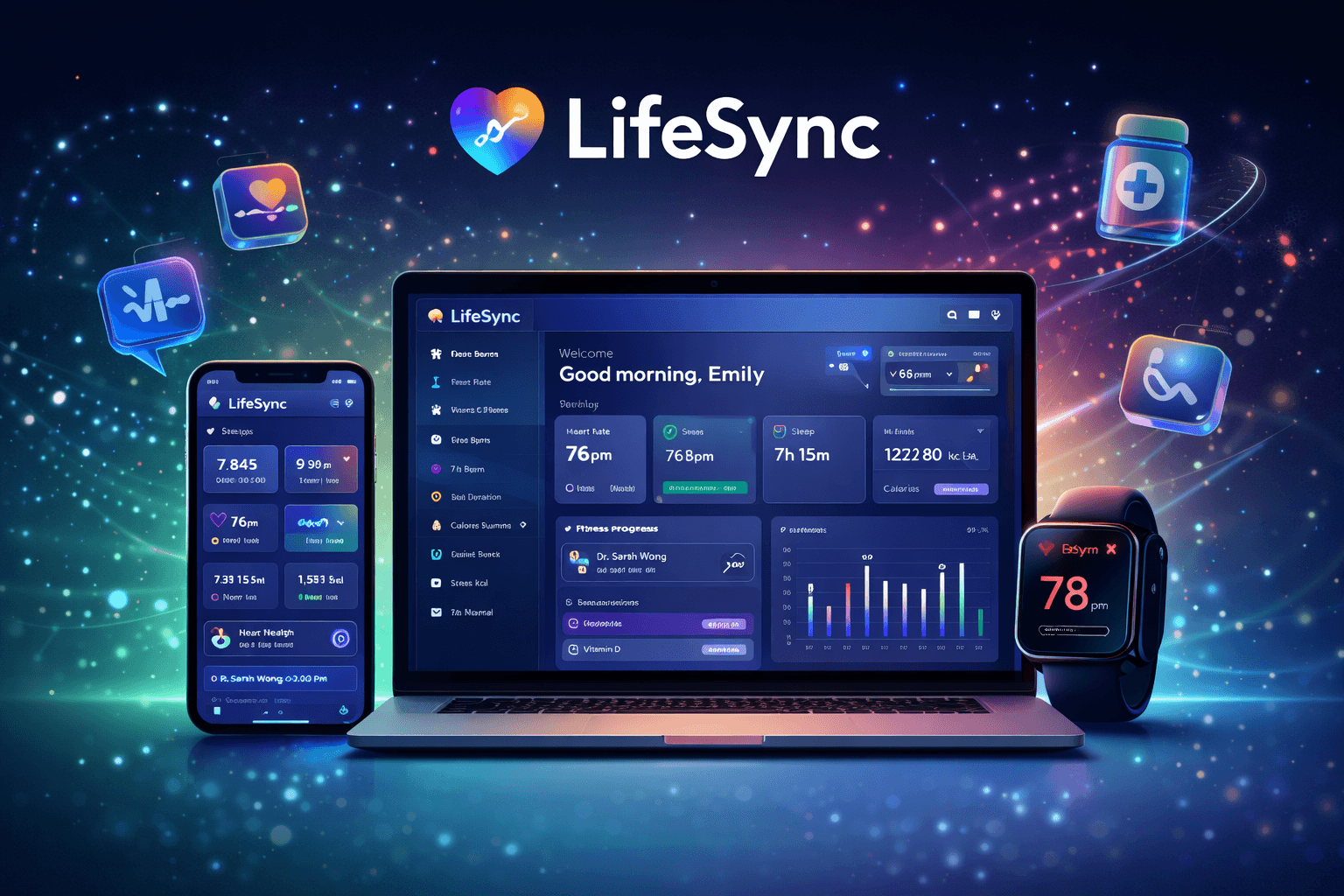
LifeSync is an adaptive routine + habit system built to keep people moving when real life changes (low-energy days, missed routines, shifting priorities). I defined product needs from user insights, balanced UX goals with technical constraints, and shaped the experience around a clarity-first “Next Best Action” and graceful recovery—so progress feels achievable, not punitive.
The work spans end-to-end product design from concept to delivery: problem framing → scenarios + journey/flows/IA → hi-fi UI → interactive prototype (demo + code-ready behaviors) → design system contribution → handoff-ready specs. I packaged the solution as a narrative walkthrough for design + engineering, and built reusable components, variants, and state-driven patterns (empty/loading/error/recovery) so teams can ship consistently and scale the system over time.
Timeline
5 weeks — Discovery → Journey/Flows → Hi-fi → Prototype → Narrative walkthrough/demo → Handoff
Background
Most habit apps assume stable days and reward perfect streaks—when life gets messy, users face guilt + complexity and drop off. Users don’t need more reminders; they need a system that adapts, reduces cognitive load, and supports recovery after slip-ups. LifeSync focuses on decision clarity + follow-through: a calm experience that guides the safest next step, keeps goals realistic, and maintains momentum even when routines break—simple to explain to stakeholders and robust enough to scale in production.
Deliverables
User insights • scenarios • journey/flows/IA • interactive prototype • narrative walkthrough/demo • reusable components + states • handoff specs
End-to-end product design from insight to delivery: research → scenarios → flows/IA → hi-fi → interactive prototype (demo + code-ready behaviors) → design system contribution → handoff—built to reduce cognitive load, clarify decisions, and make the value easy to communicate across teams.
1) Cross-functional + constraints
Partnered with PM + Engineering to translate routine planning + recovery constraints into decision moments, edge-state behavior, and implementation-ready specs—balancing user needs with feasibility and ensuring consistency from concept to build.
2) Templates/flows/diagrams
Used repeatable templates to produce journey maps, process flows, and concept diagrams—aligning stakeholders quickly on the “before → after” story and reducing rework downstream.
3) Fast iteration
Iterated rapidly from flows → wireframes → hi-fi → interactive prototype, incorporating feedback loops to refine hierarchy, microcopy, and the Next Best Action moments—so the experience stays calm, predictable, and demo-ready.
Research & Insights
Ran quick interviews + pulse checks to understand why routines break (overplanning, guilt loops, notification fatigue, unclear priorities). Synthesized into 2 core JTBD and defined success metrics tied to decision
clarity: time-to-plan ↓ • follow-through ↑ • perceived control ↑ Packaged insights into clear scenarios to share with stakeholders and guide tradeoffs.
Design & Prototyping
Mapped the core journey: onboarding → goal setup → routine generation → daily check-in → reschedule/recovery. Started low-fi for structure, then shipped hi-fi screens with clarity-first hierarchy, accessible type, and reusable components. Built interactive prototypes to demonstrate key behaviors (adaptive suggestions, one-tap reschedule, minimum-effort mode) as a demo-ready flow.
System & Handoff
Built a scalable UI system: tokens + components + variants + edge states (empty/loading/error/recovery). Delivered handoff-ready specs (interaction notes, redlines, states) and reusable patterns—so implementation stays fast, consistent, and easy to extend.
Deliverables
User scenarios • journey map • flow diagrams • interactive prototype • narrative walkthrough/demo • reusable component + state system • handoff specs
LifeSync is designed for real life—adaptive plans, clear priorities, and graceful recovery—built as a customer-ready story that’s easy to demo and a scalable UX system that’s easy to ship. The solution balances emotional calm (less guilt, more control) with functional clarity (next action, predictable states) under real constraints.
Adaptive Scheduling
Clarity & Hierarchy
Recovery & Reschedule
1) Reusable system contribution
Built reusable components + variants (tokens, layout rules, states) and defined patterns for edge scenarios—so behavior stays consistent across features, improves design-system adoption, and scales cleanly in production.
2) Demo-ready prototyping + handoff
Delivered clickable hi-fi prototypes with implementation-ready (code-ready) behaviors and clean specs (redlines, variants, empty/loading/error/recovery). Partnered with engineering through QA—ensuring the demo narrative matches what ships.
Adaptive Scheduling
Generates flexible routines from goals, available time, and constraints—then auto-adjusts when days shift (low energy, surprise tasks, missed blocks). Keeps the plan realistic without user rework, preserving trust and follow-through.
Impact → fewer re-planning loops • more consistent execution
Clarity & Hierarchy
A “Today” view surfaces 1–3 priorities with a single, clear Next Best Action. Progressive disclosure reduces decision fatigue so users always know what to do now—ideal for a simple before/after story and fast daily use.
Impact → faster starts • fewer “what now?” moments • higher perceived control
Recovery & Reschedule
Slip-ups don’t reset momentum. Users can one-tap reschedule, switch to Minimum-Effort Mode, and continue with a smaller win—supporting recovery without guilt or streak-break anxiety. Impact → stronger return-to-routine behavior • less drop-off after misses
Narrative artifact
a short walkthrough explaining the problem, the concept, and why it matters for design + engineering.
Outcomes from LifeSync’s end-to-end product design—built to improve decision clarity, follow-through, and recovery, while staying easy to communicate across teams (design + engineering) and easy to scale through a reusable system.
Reduced planning friction
Introduced a clarity-first “Next Best Action” model and limited daily focus to 1–3 priorities, helping users decide faster and start sooner.
Impact → faster task selection • fewer “what now?” moments • higher perceived control
Improved consistency through recovery
Designed one-tap reschedule, Minimum-Effort Mode, and non-punitive progress logic so missed days don’t feel like a reset.
Impact → stronger return-to-routine behavior • less drop-off after slip-ups • better real-world adherence signals
Scalable foundation for shipping
Built a reusable component + state system across flows (empty/loading/error/recovery) to keep behavior consistent as features expand.
Impact → cleaner handoff • faster iteration loops • easier rollout/reuse across new scenarios
Learning
Clarity beats motivation: reducing friction + enabling graceful recovery drives consistency more than streak pressure.
Story takeaway
LifeSync shows how adaptive planning + recovery can be communicated as a crisp before/after narrative—supported by a demo-ready prototype and implementation-ready patterns.