containerized deployment platform
Designed accessible, step-free navigation for everyday travel
ROLE
UX Designer
EXPERTISE
UX/UI Design
YEAR
2025
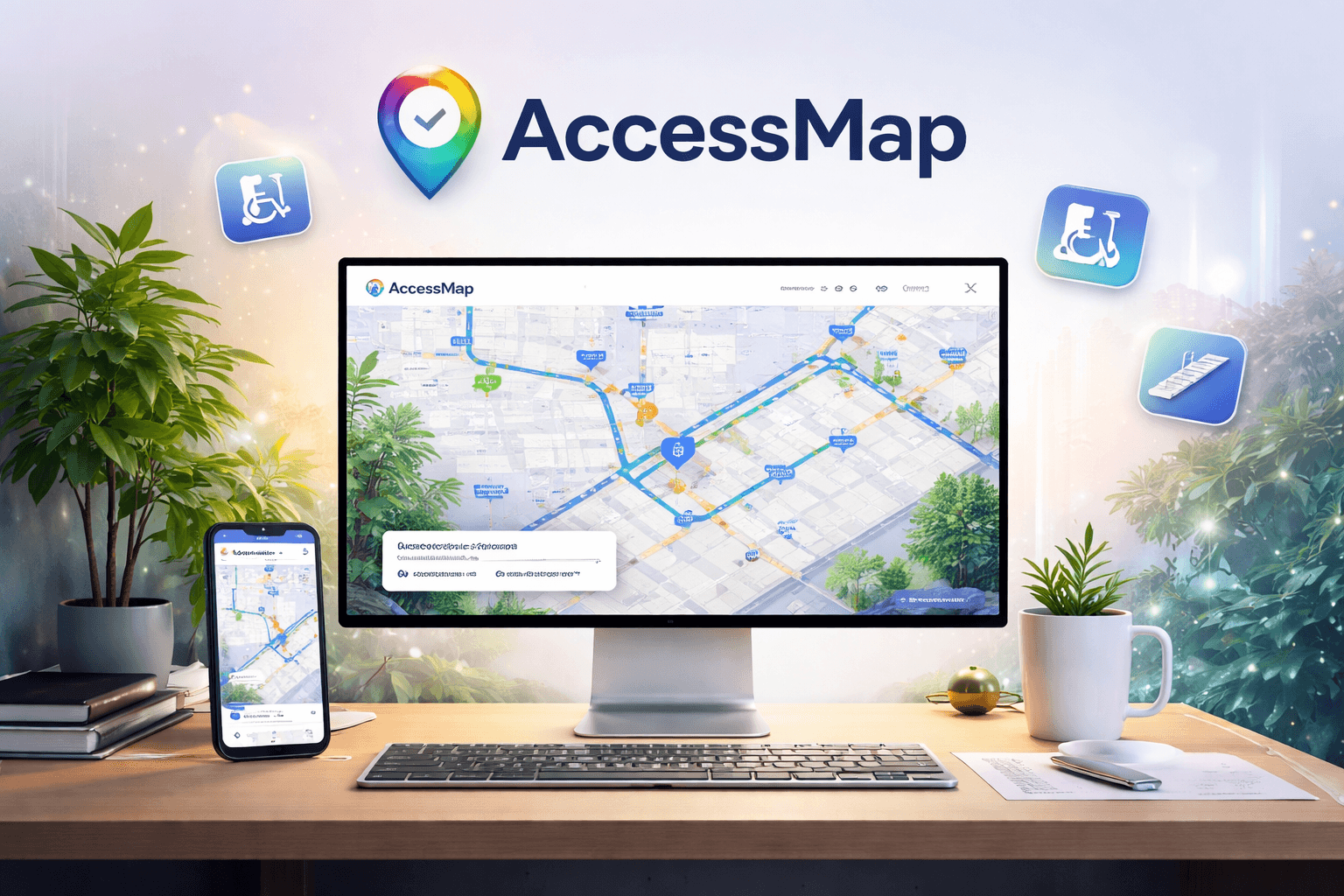

AccessMap is an accessibility-first navigation experience that helps people choose routes that match their mobility needs—not just the shortest path. It reduces uncertainty by surfacing step-free options, surface quality, slope, curb cuts, and real-world barriers so users can travel confidently.
Timeline
4–6 weeks (discovery → mapping → flows → UI → prototype → validation)
Why this matters
Most maps assume a “default body.” For wheelchair users, elderly users, parents with strollers, and people with temporary injuries, a route with stairs or steep slopes isn’t a minor inconvenience—it’s a hard stop. AccessMap makes routing inclusive by design.
I approached this as a high-stakes UX problem: reliability, clarity, and accessibility are non-negotiable.
Research & Insights
Identified key user groups: wheelchair users, cane users, stroller users, travelers with luggage.
Mapped primary jobs-to-be-done:
“Get from A to B without barriers.”
“Know what to expect before I start.”
“Recover quickly when something changes.”
Found core pain points:
Uncertainty (hidden stairs/ramps)
Anxiety from last-minute obstacles
Lack of route confidence and fallback options
Problem framming
How might we provide routes people can trust—by turning accessibility constraints (steps, slope, surface) into understandable, controllable choices?
Information Architecture & Flows
Designed flows around decision moments, not screens:
Route selection (compare accessible options)
Route explanation (why this route is safer)
Navigation (live guidance + hazard alerts)
Recovery (reroute instantly, report barrier)
Validation & Iteration
Prototype testing focused on:
Time to choose a safe route
Comprehension of slope/steps information
Confidence level before starting navigation
Iterated on filter clarity, route badges, and “explain this route” affordances.
AccessMap converts complex accessibility data into a calm, actionable navigation experience.
Step-free and Low-stress routing
Users can choose routes based on:
Step-free preference
Max slope tolerance
Surface quality
Elevator availability
Curb cut presence
Confidence-based route cards
Each route includes:
Clear accessibility badges (steps, slope, surface)
A confidence score (data quality + community validation)
“Why this route?” explanation to build trust
Community-powered reporting
Report barriers in 2 taps (stairs, construction, blocked ramp)
Upvote/verify reports to improve reliability
Visible “last verified” timestamps for trust
Here, the outcomes and achievements of the project are highlighted, including user feedback, adoption rates, and industry recognition.
Faster route decisions
Users can compare step-free options quickly using route cards and accessibility badges, reducing decision fatigue.
Higher confidence before navigation
“Why this route?” + visible constraints (slope/steps/surface) helps users predict real-world difficulty and avoid anxiety.
Improved accessibility and safety outcomes
Barrier reporting + rerouting reduces failed trips caused by unexpected obstacles and supports safer navigation.